
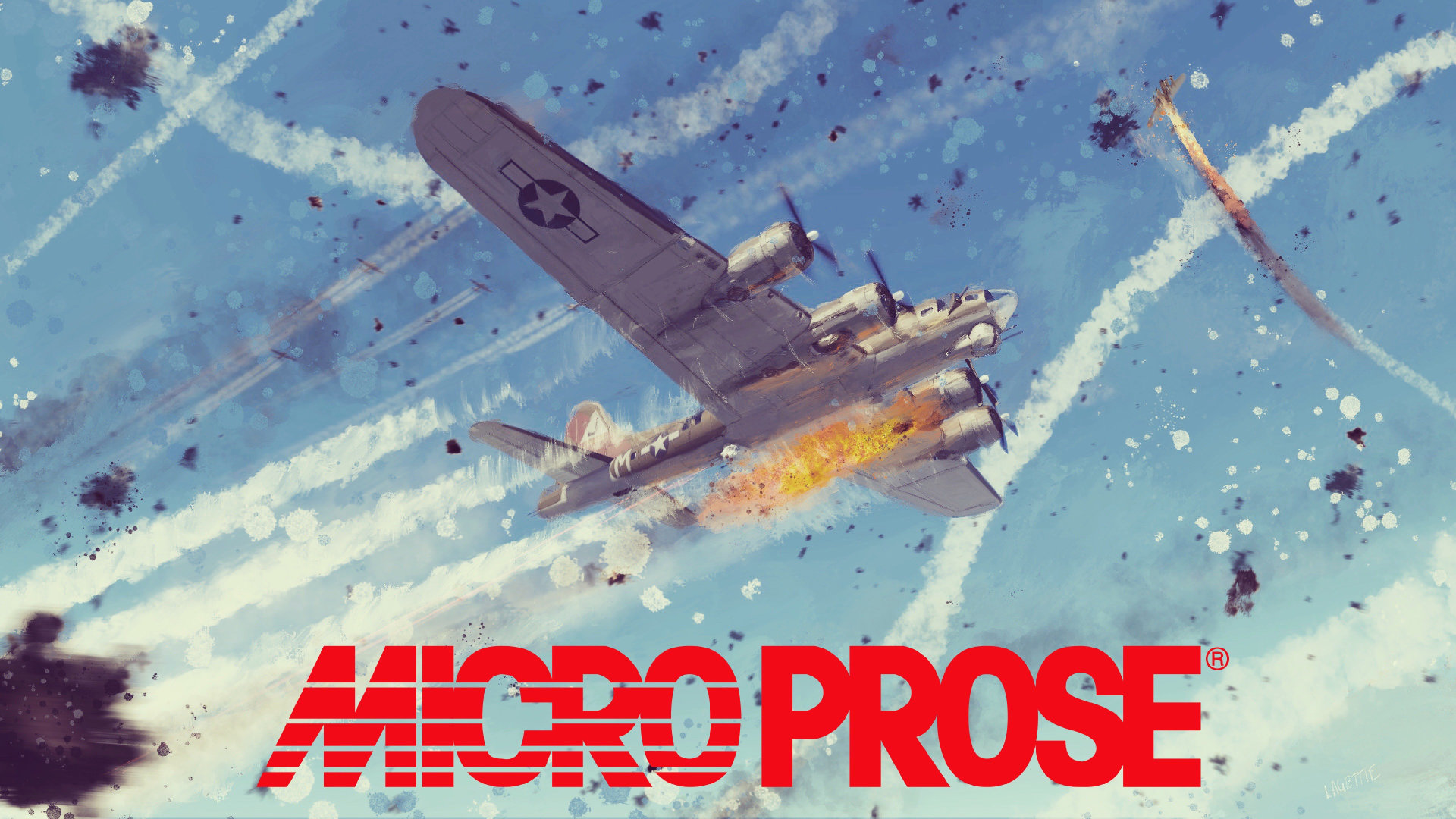
Hello team at MicroProse.
My name is Gerad Allen Blume and I am a military historian specializing in strategic airpower theory, doctrine, and operations. I have a Bachelor of Arts (History) from the University of South Carolina-Aiken, a Master of Arts (Military History) from Norwich University (Northfield, Vermont), and I completed a little over a year toward a Doctorate of Philosophy (War & Society) at the University of Southern Mississippi before returning to my home in South Carolina. Currently I am Vice President of Hangar Thirteen (Asheville, North Carolina), a nonprofit organization rebuilding a Boeing B-17F that was shot down over Beauvais, France on 6 September 1943. Our effort is unparalleled in its dedication to accuracy, and because of this, I am also a consultant for the Restoration Division of the National Museum of the US Air Force (Dayton, Ohio).
I reached out to Sergio Costa to see if I could help your work be as accurate a recreation as possible. The 1992 PC sim was a huge part of my younger years and it is my hope that this new sim will inspire others the way the original did for me.
Please do not be taken aback by my critiques. From what little experience I have in computer-aided design, I appreciate the amount of work it took to come this far. I just feel that, if the opportunity is there, why not work to make it as accurate as possible?
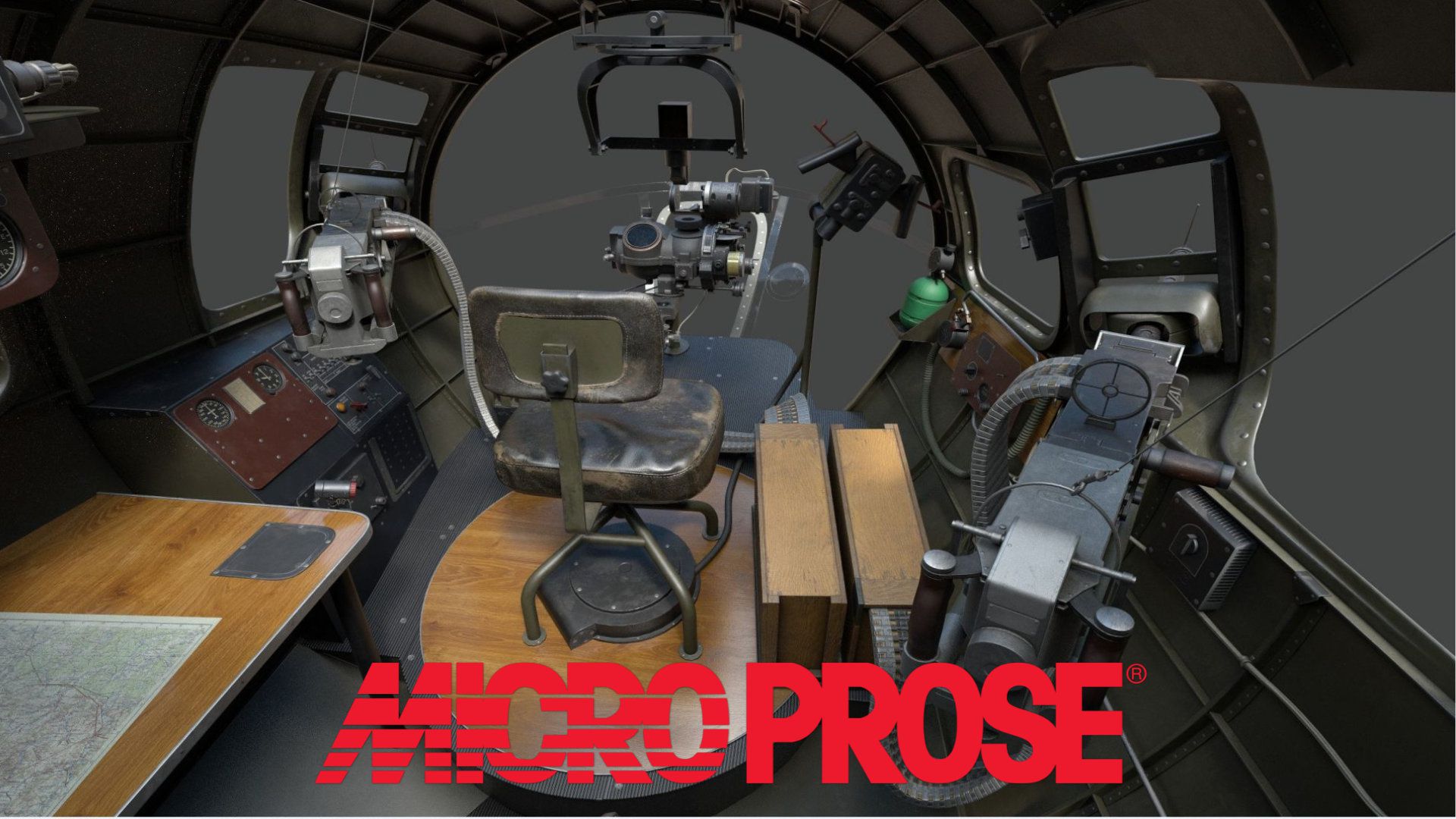
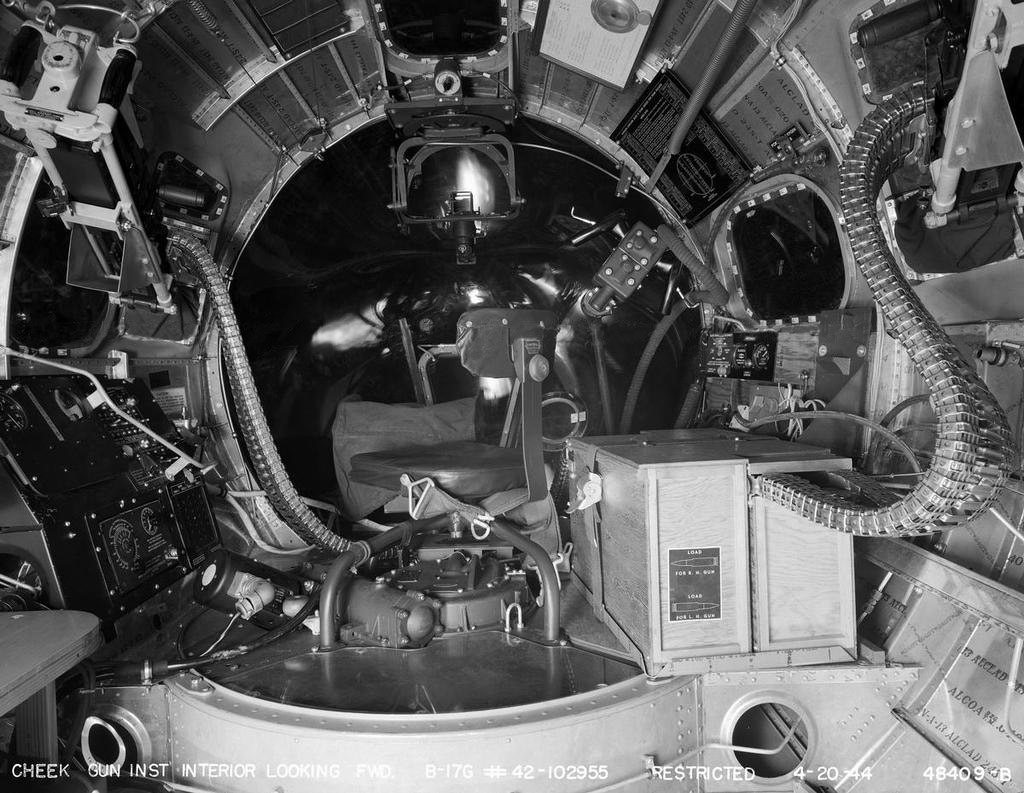
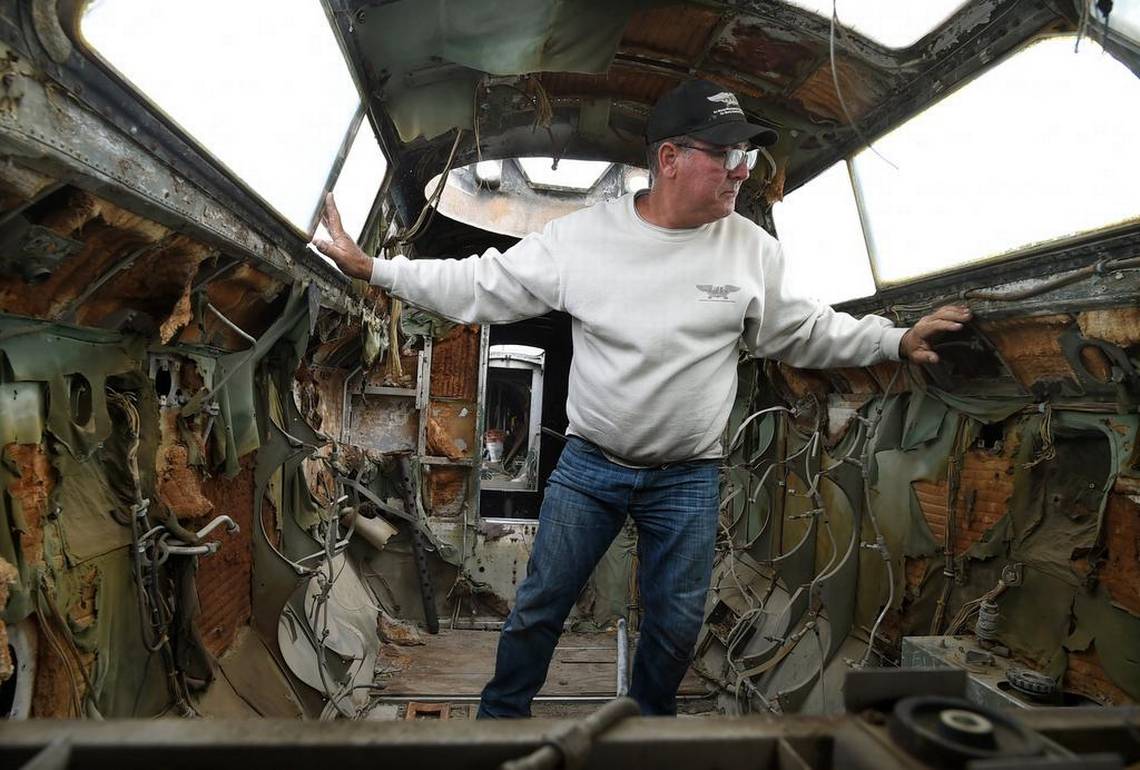
The first thing that immediately catches my eye is the paint color. B-17 interiors were not painted. While the manual calls for the cabin (the nose, cockpit, and radio compartment) interior to be painted “Berry Bros. Bronze Green,” photographs and wreckage reveal that only the cockpit was regularly painted.
However, bare aluminum was stamped with a series of markings which detailed composition and manufacturer. You can see these markings clearly in the bottom right of the photo above. Visit this page at Hangar Thirteen to see examples of these markings.
Speaking of color, the handles on the gun mounts are wrong. While the charging handle was made of wood, the mount handles were black as they were made of Bakelite.
Next is the chair. The B-17’s “posture” chairs were made by Cramer Chairs and were military versions of their “Air-Flow” series. The shape of the frame and backrest is wrong, as well as its coloring. The metal frame was painted Bronze Green and the cushions were a dark green vinyl. Likewise, the bombardier’s chair on G-model B-17s sat somewhat close to floor and was angled forward. The floor under the bombardier’s chair was clear Plexiglas so he could see inside his turret. Here is a close-up photo of this position.
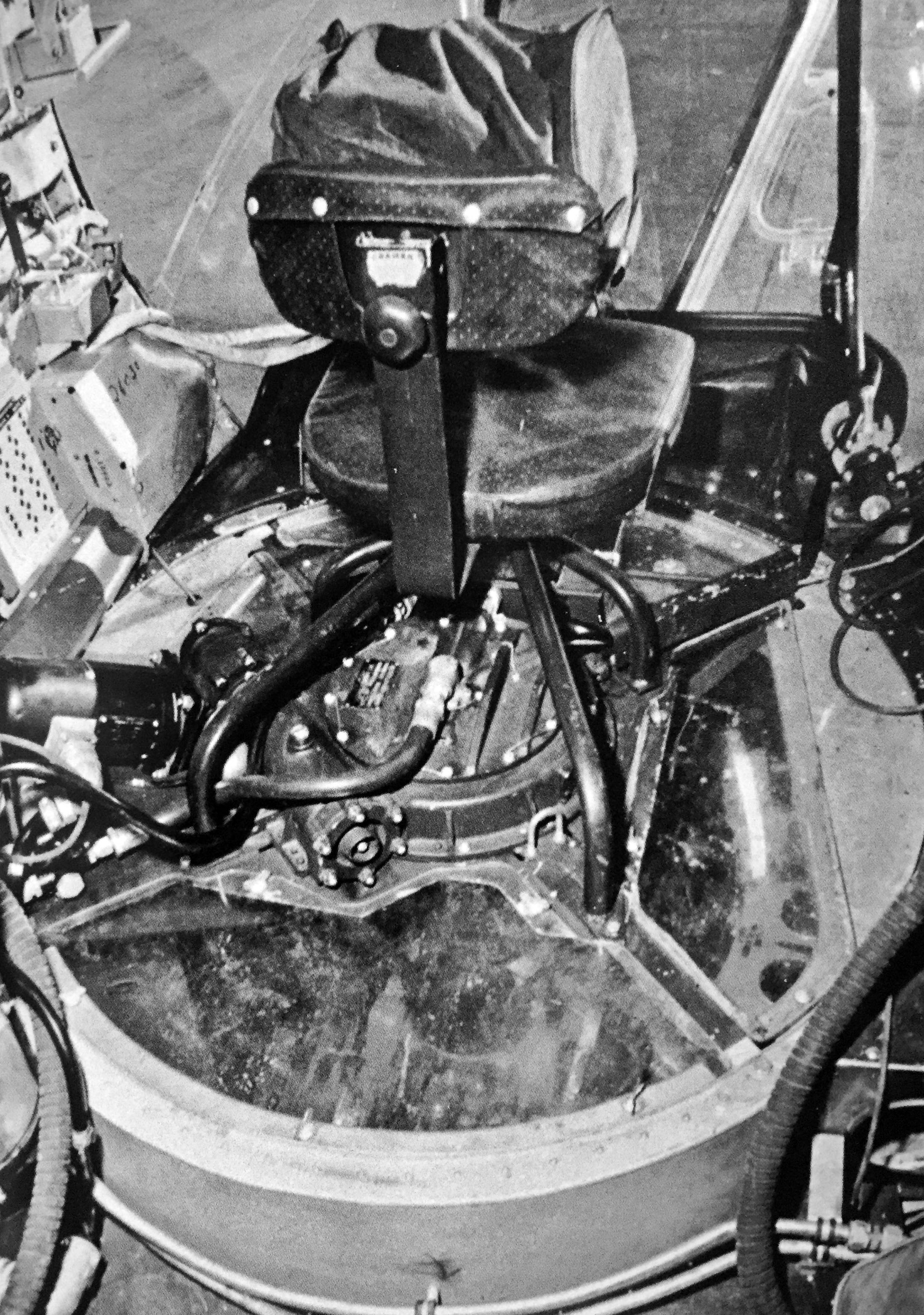
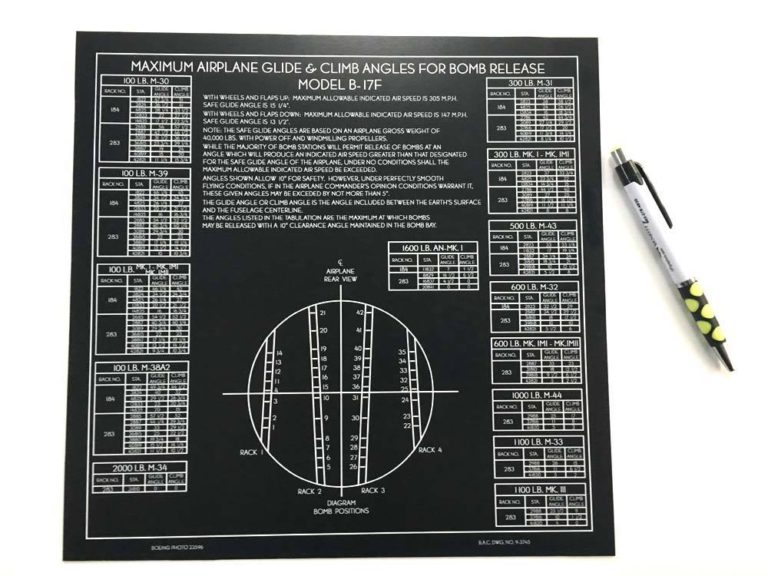
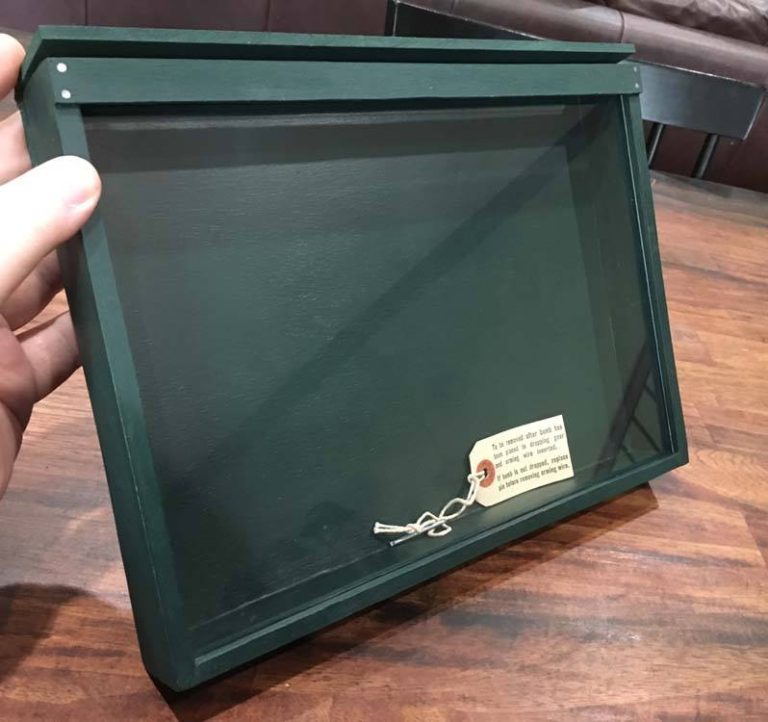
There are also a few pieces missing from your rendering: namely the seat belt, the strap holding down the cheek ammo boxes, the Glide Angles Chart, and the bombardier’s Data Card Box. The latter two items can be seen at the top of the photo above to the right of the bombardier’s position. The chart gave information regarding ballistics of US bombs and the box served as a picture frame for notes taken at briefing. Here are restored examples of the Glide Angles Chart and Data Card Box.
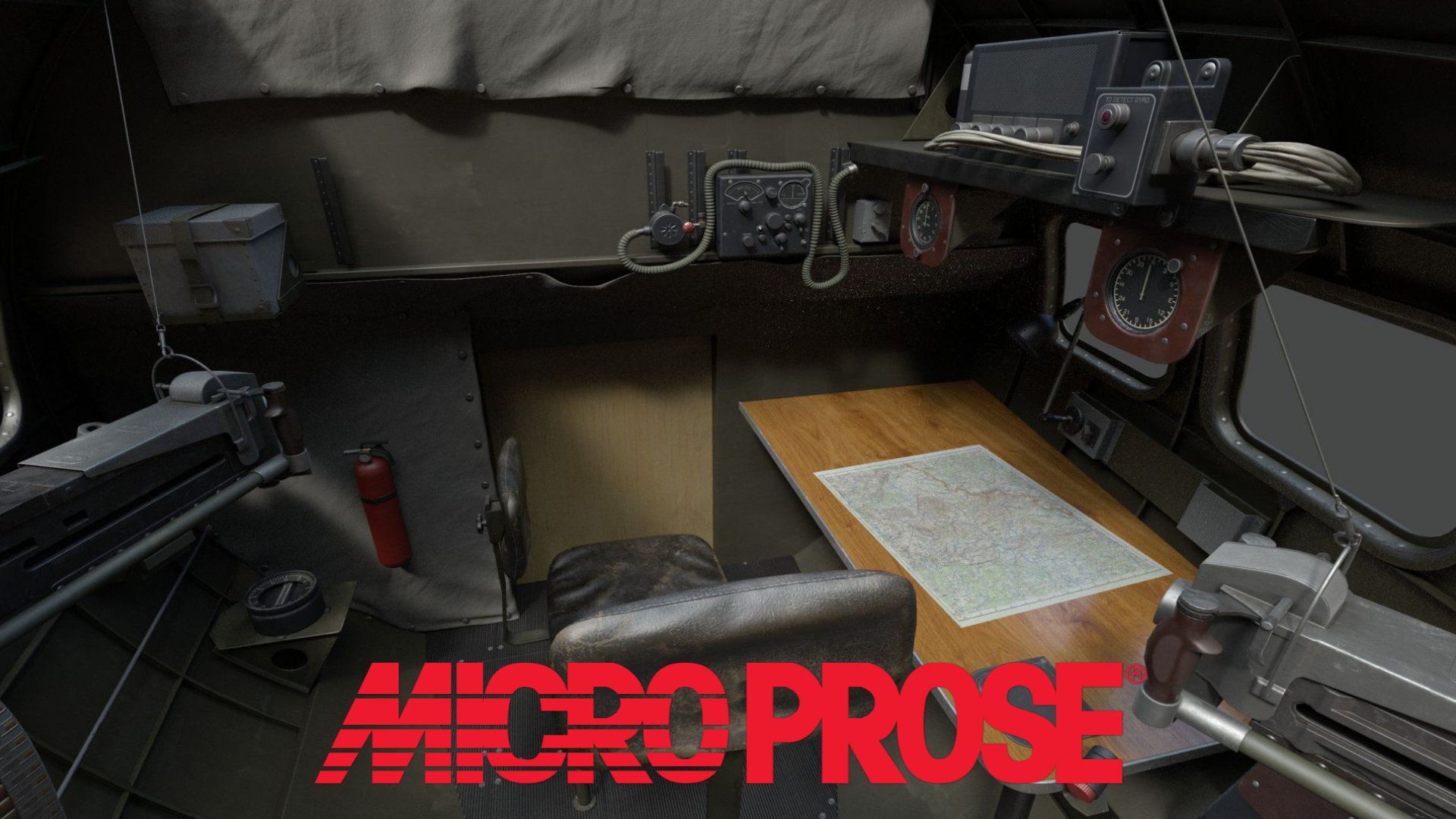
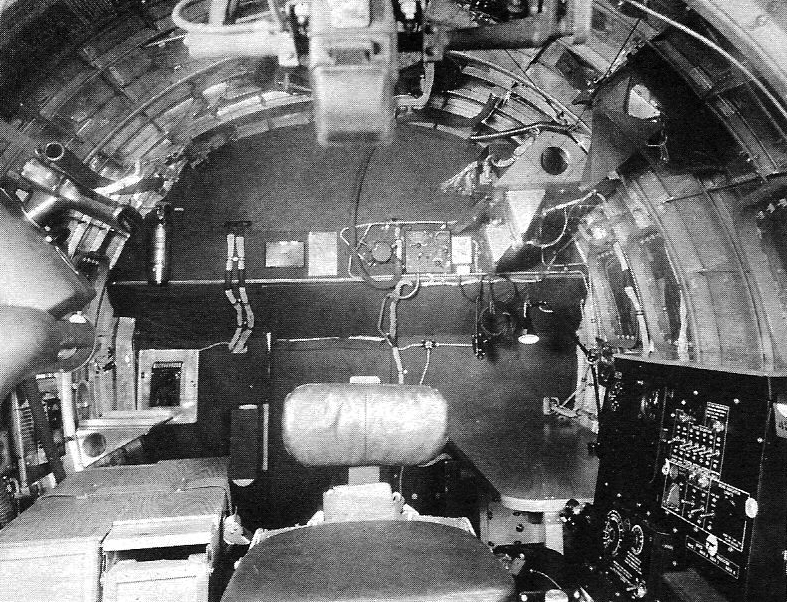
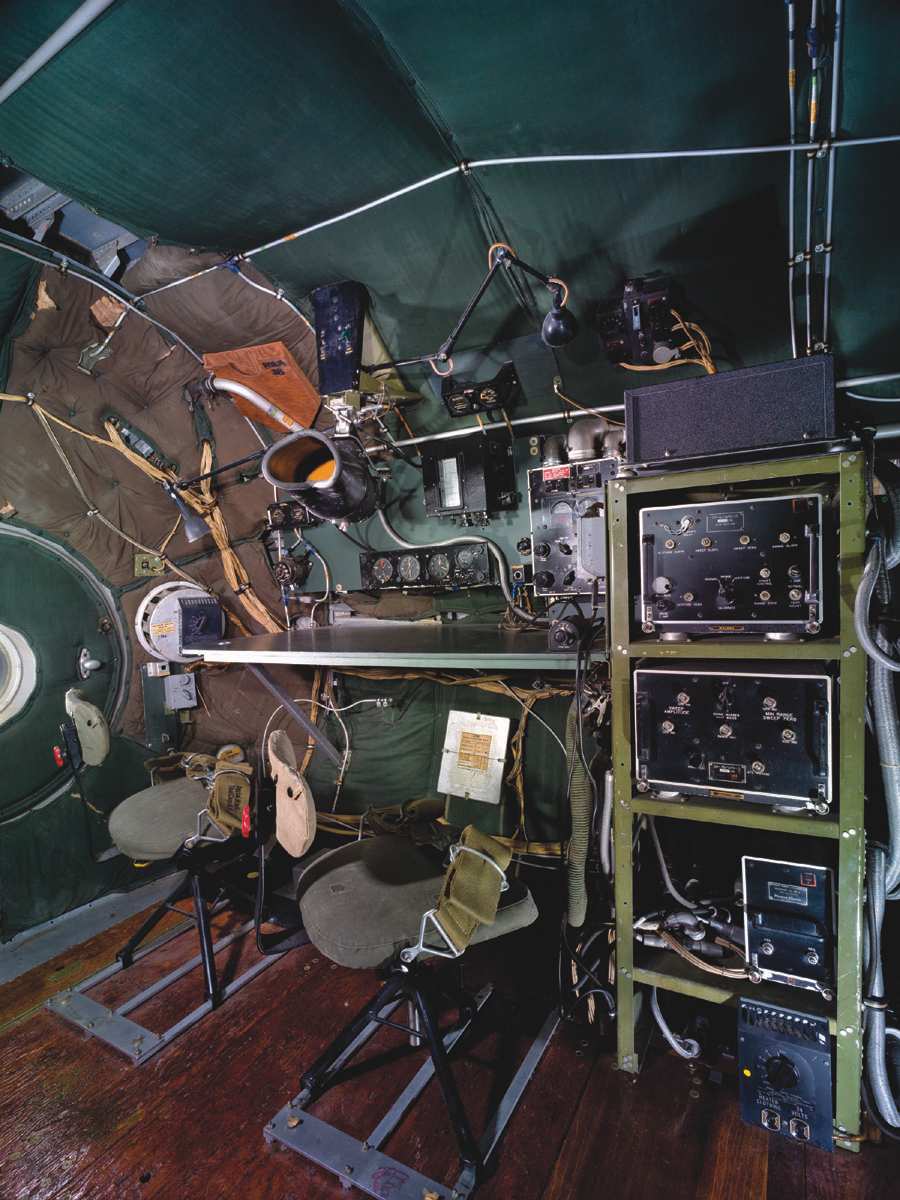
First, the navigator’s table is wrong. The table you designed is based on those found on F-model B-17s (which were themselves usually replaced). Since you are going for a G-model, your table will have to be changed. The inlay in your table is redundant as it actually holds the same compass that is hanging from the shelf above. Here is a picture showing the correct table (ignore the odd shelf arrangement). And here is the bottom of one I restored. Also, don’t forget that on G-model B-17s, the navigator’s chair was on a swivel mounted to the table.
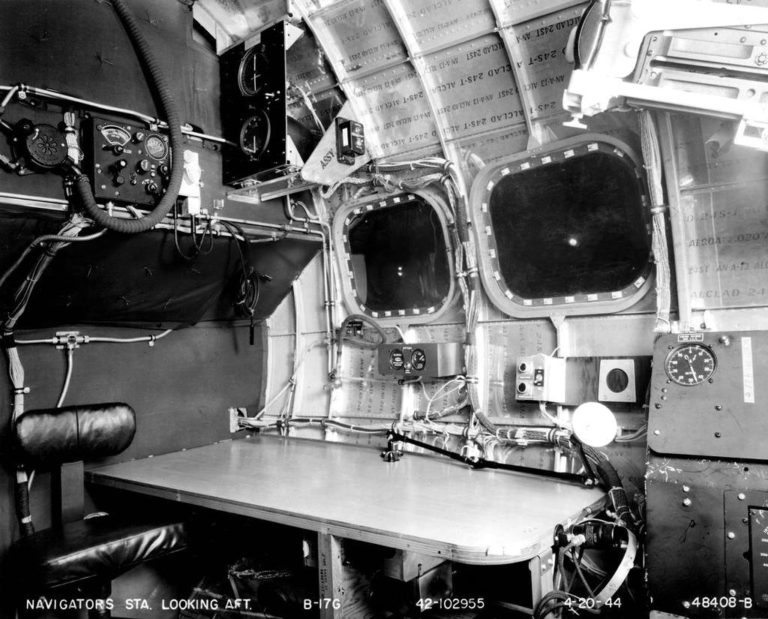
Second, remove the little shelf behind the navigator holding the large compass. These were removed early in the war and would not have been found on G-models. This compass did not work well because of the electronic interference, hence its removal. The primary compass in wartime B-17s was a remote system installed in the wing. In fact, the equipment on the shelf above the table is what operates said compass.
The extinguisher on the wall is wrong, being too small and the wrong color. There were two types of CO2 extinguishers used on US bombers: the A-17 and 4TB. Neither of them were painted red. The 4TB was the type most used on G-model B-17s. Here is an example of a 4TB. The small extinguisher in the reference photo is an A-2 carbon tetrachloride type. These brass pump extinguishers were useful for fires that CO2 could not easily put out. Here is an example of an A-2.
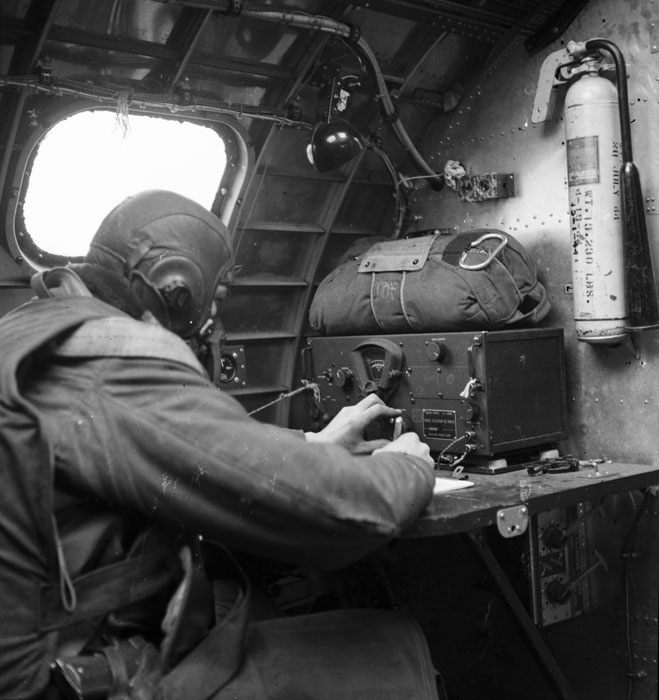
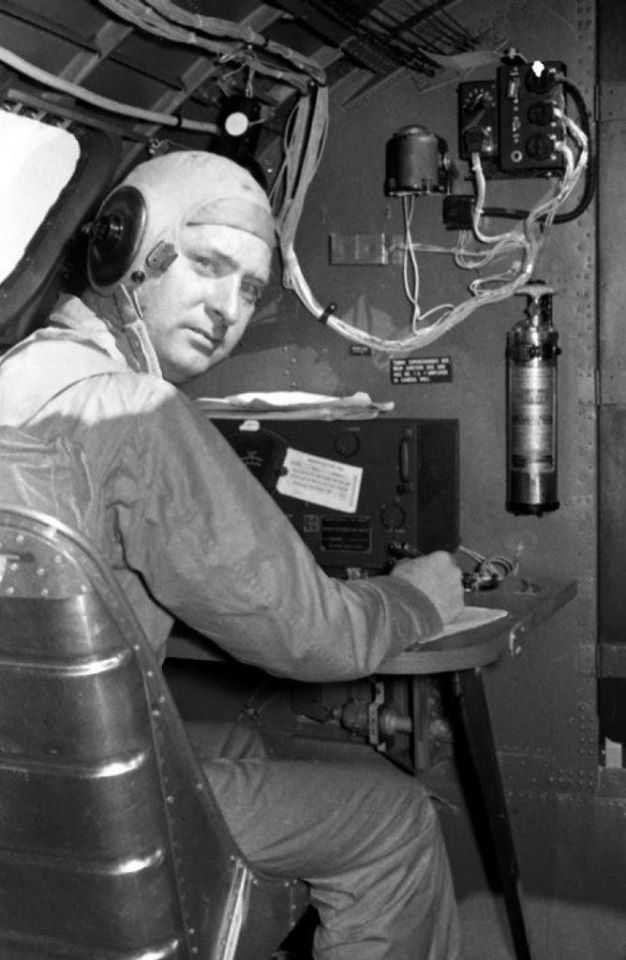
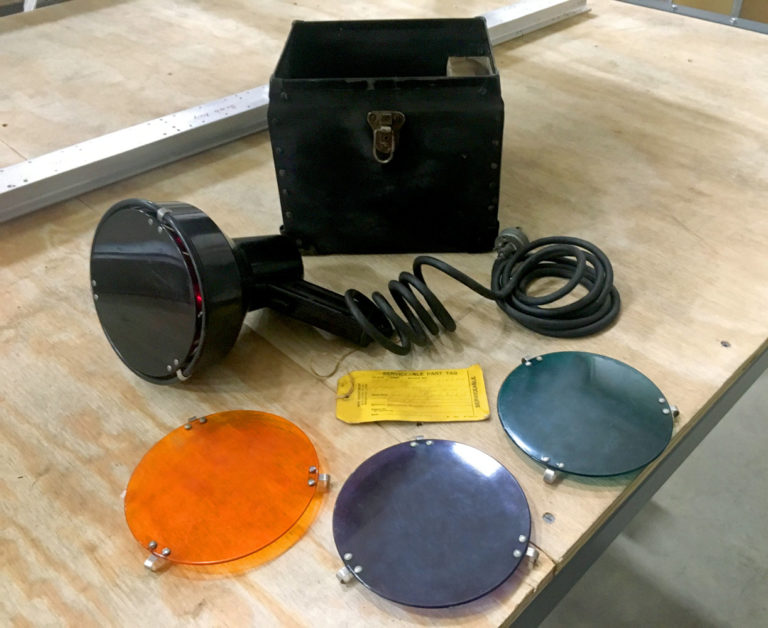
The box on the wall contains an Aldis Lamp. While some B-17s carried the lamp in the nose, they were usually mounted on the back of the pilot’s seat. Here is a pic showing what was in the box.
You will note that, in the reference photo, there is an empty shelf on the wall behind the navigator’s position. This shelf holds the drift recorder. Here is a pic showing one up close (ignore its storage case).
Lastly, be sure that the back wall of the nose is completely fabric covered. The fabric was dyed Bronze Green. While no B-17 today still has her interior fabric, there are a few B-29s (built by the same company) that do. Here is an example of bronze green fabric aboard a B-29.
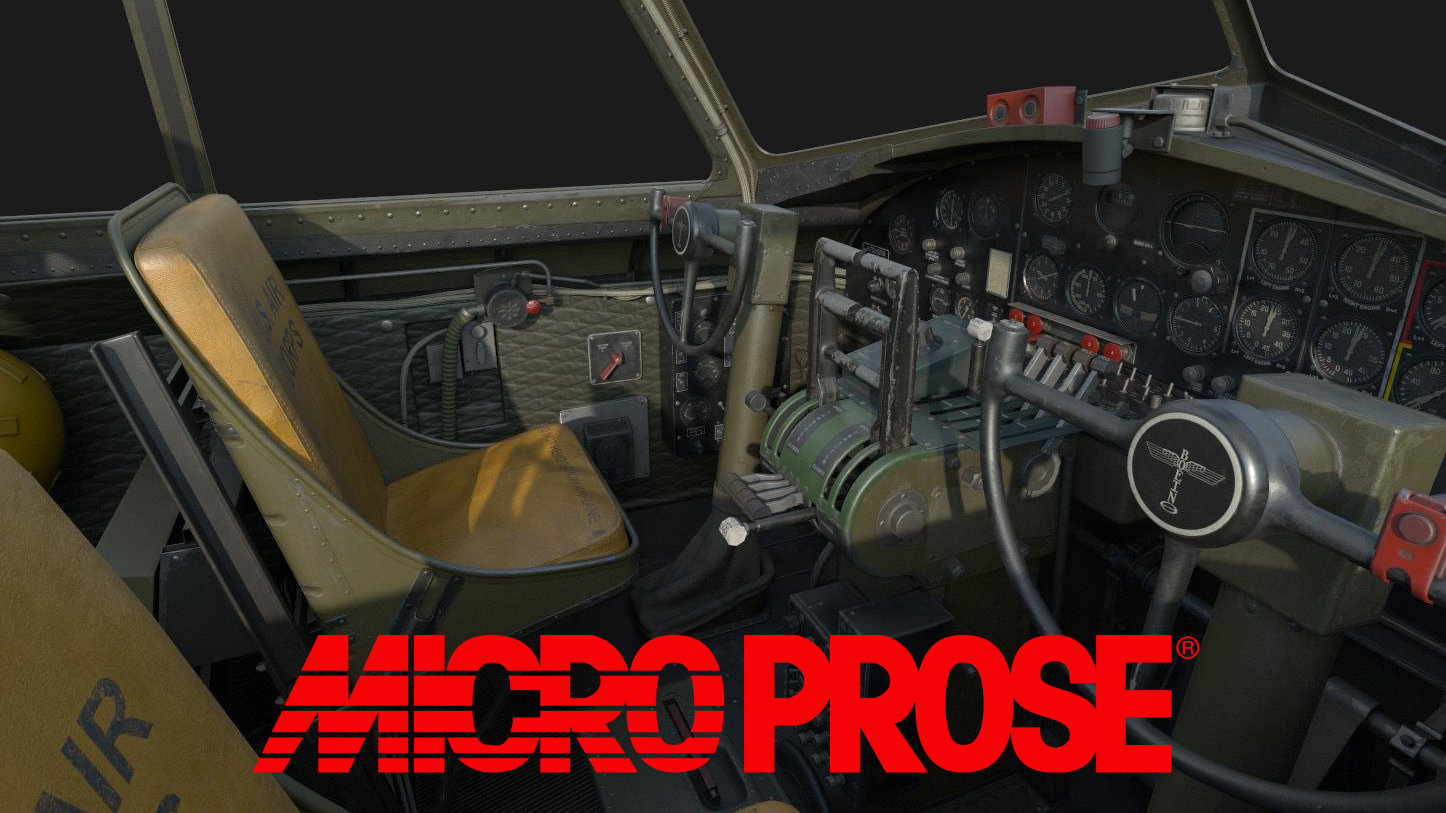
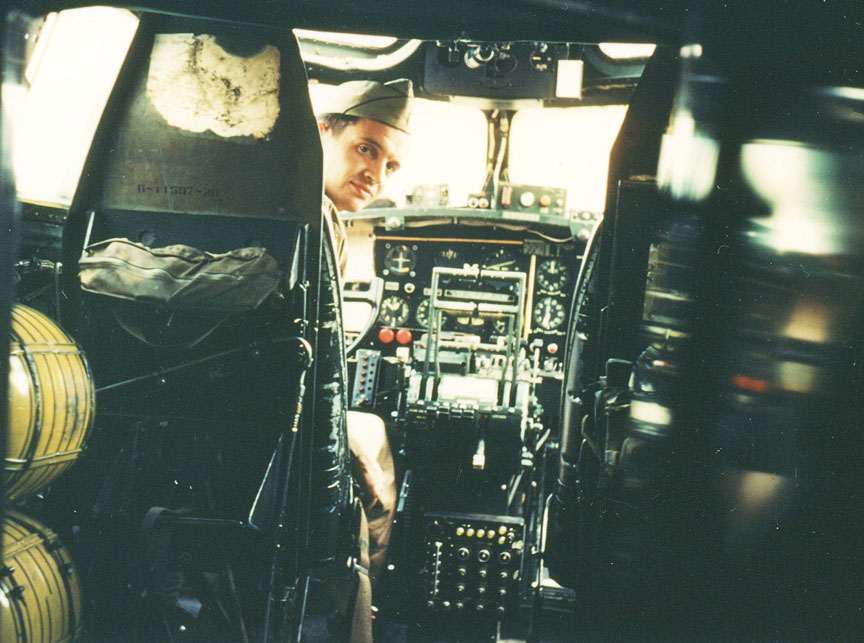
Once again, the first thing that catches my eye is the color – the cockpit was not olive but Bronze Green. You can see an example of this color here. Oddly enough, it seems that you used Bronze Green on the turbo and oil mixture controls.
While it is correct that the cockpit was insulated, it was not a diamond-shaped insulation. The insulation in G-model cockpits was entirely tube-stitched. And, unless the fabric was extremely worn, the stitching of the insulation could not be seen beneath the fabric. Check out this photo from Preston’s Pride – an untouched B-17G – where the fabric has torn away to show the insulation beneath.
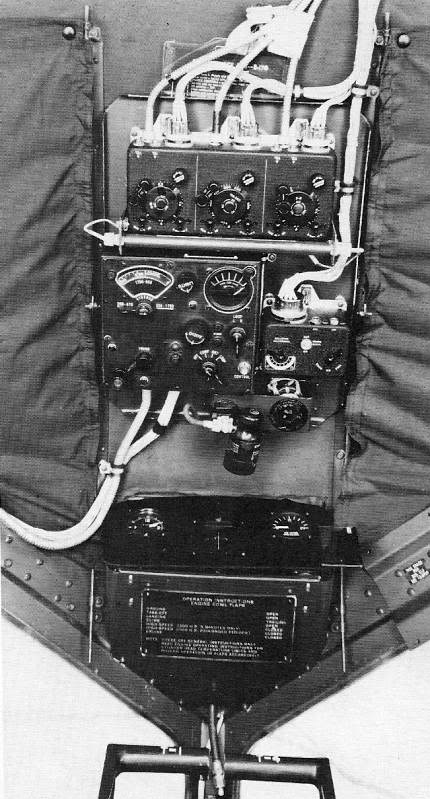
The wiring going up the left corner window is missing a metal splined cable. This cable connects the radio compass (the football antenna) to the control box on the roof of the cockpit. Remember the black box on the wall beside the navigator? That’s a control box for the radio compass. There is a T-shaped connector which connects that box, the football antenna, and the power unit (under the cockpit floor) to another control box above the pilots. Here is a picture showing that cable going up the window corner. And here is a picture of the area above the pilots (ignore the closed shade on the windows).
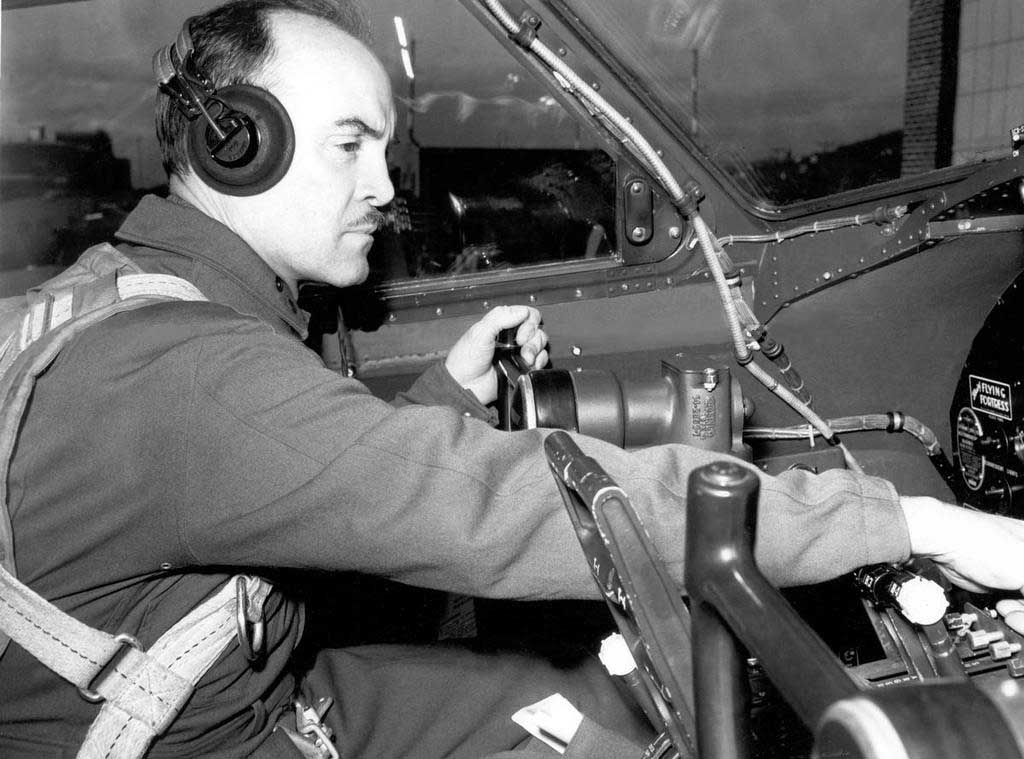
There should be a slight arc to the yoke caps as they were rounded. Likewise, the logo on your caps is the type seen on replacements, as pilots regularly stole them for souvenirs. B-17s were made with yoke caps which featured a design with logos showcasing where the bomber was originally built (Boeing, Douglas, or Vega). Here is an example of a yoke cap from a B-17 built by Boeing.
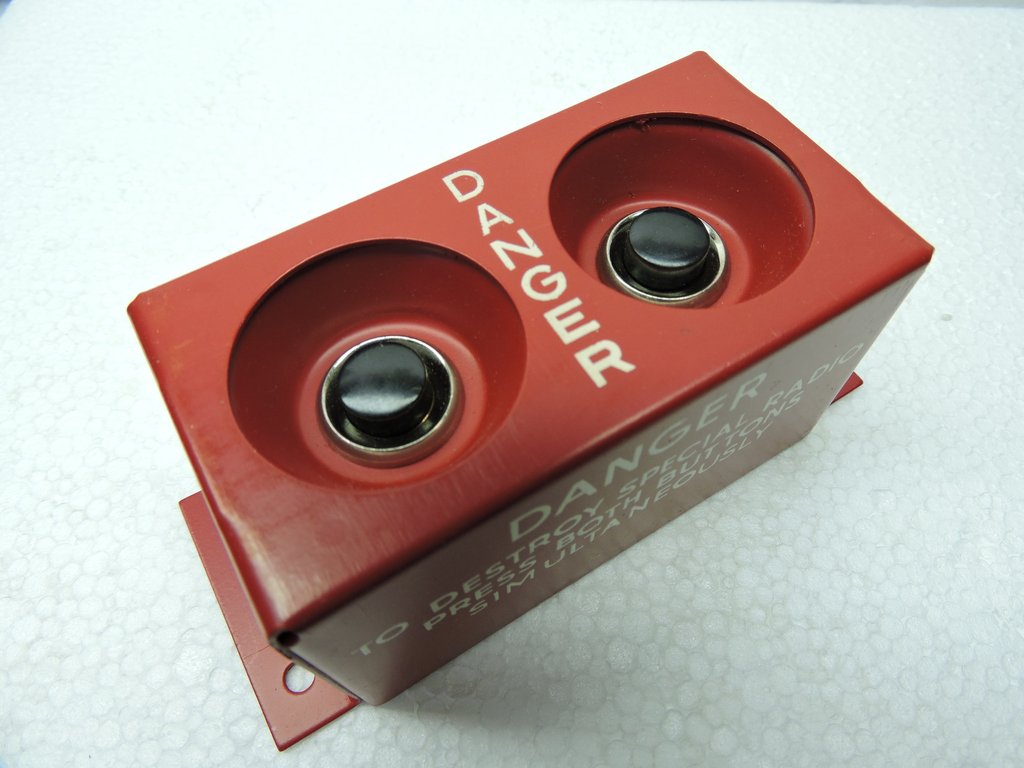
It appears your BC-765 switch is lacking in detail. Here is a close-up which may be useful. The BC-765 was a manual self-destruct switch for the aircraft’s SCR-595 IFF (Identify Friend from Foe) transponder. An automatic self-destruct for the transponder is kept above the radio operator’s desk.
Don’t forget the seatbelts.
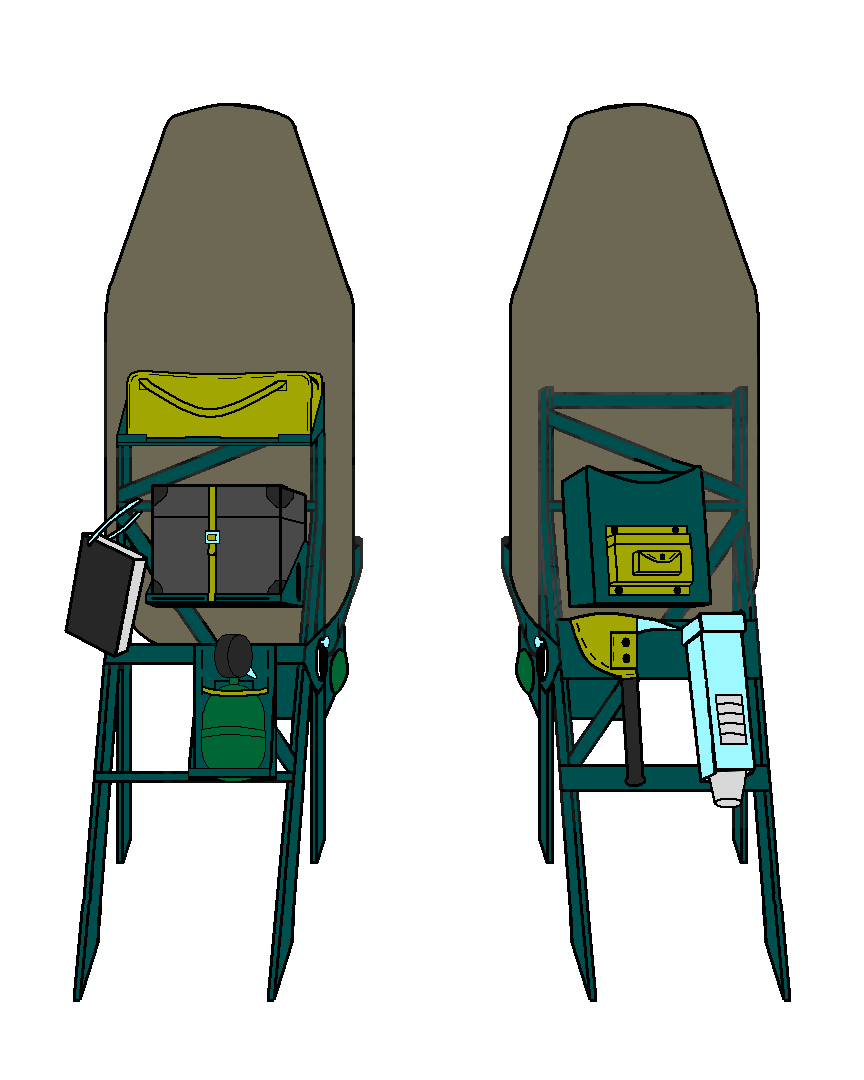
Lastly, there should be armor plating behind the pilot seats! Very few surviving B-17s still have any armor plating, however the armor was very visible in wartime. Here is a drawing of the seat arrangement on the B-17F Hangar Thirteen is rebuilding. The setup in this drawing is not terribly different from that seen on G-models. Visible are three Walkaround Oxygen Bottles, two Ashtrays, the Flare Container, the Aldis Lamp box, a Familiarization Manual on a string, the Wiring Diagram Box, the Fire Axe, and the Paper Cup Dispenser. Remove the Familiarization Manual, move the Paper Cup Dispenser to the wall beside the Thermos Bottles, and replace the Dispenser with a Carbon Tet Extinguisher, and you should be fine.
Once again, the primary issues in this rendering are color and texture as the fabric in this compartment was dyed to match the Bronze Green paint called for in the manual. Likewise, the diamond texture is incorrect. The insulation was tube-stitched and not visible unless the fabric was highly worn.
Next is the thermos bottles – they should be a matching pair. These thermoses were military versions of the famed Stanley thermos and were mounted inverted along with a paper cup dispenser. The idea was to fill one with coffee and the other with cocoa, but many units removed the bottles to keep airmen from having to urinate. Here is an article I did on the thermoses.
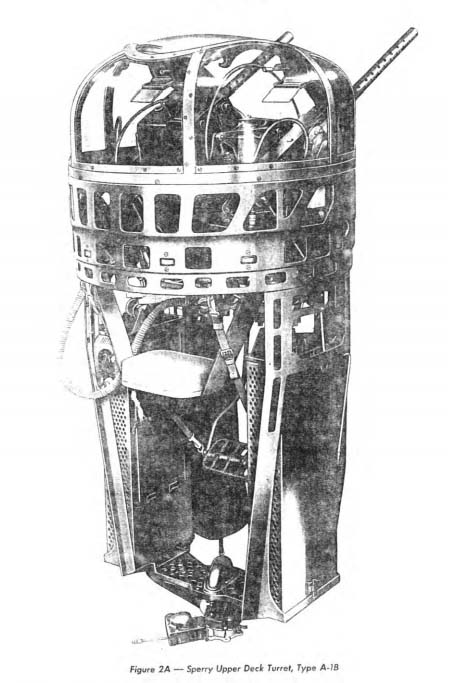
The only real issue with the top turret is the color. Turrets were manufactured by subcontractors and their interiors were generally painted Dark Dull Green – a color similar to Bronze Green but less blue. A-1B turrets were very complex, so it may help to reference the manual. I scanned a top turret manual for use by our volunteers at Hangar Thirteen – you are welcome to reference it. You will need to refer to the Type A-1B variant to fit your late-G model. Earlier G-models used the A-1A.
Speaking of variants: the turret here highlights an issue which I have brought to Sergio’s attention. The artwork you released shows an OD painted B-17G flying amongst flak. However, the interior of your aircraft features a Type A-1B top turret, staggered waist guns, and a Cheyenne tail gun. With these features, the B-17G you rendered could not have entered service any earlier than August 1944. If this is okay, then there are some additional changes to consider, such as adding a GEE box to the navigator’s position and, most importantly, making the exterior of the airplane silver (they stopped painting B-17s in March 1944).
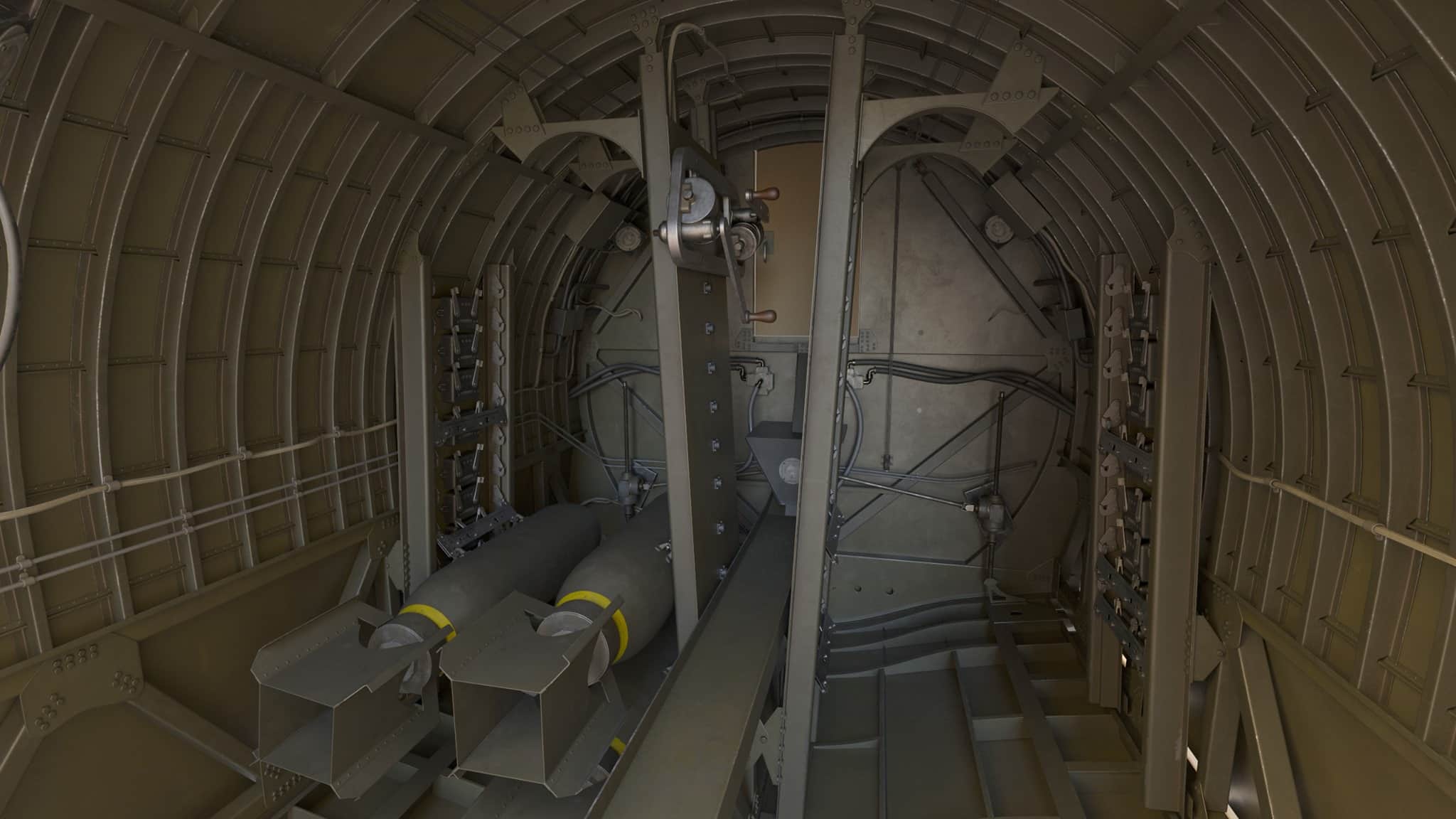
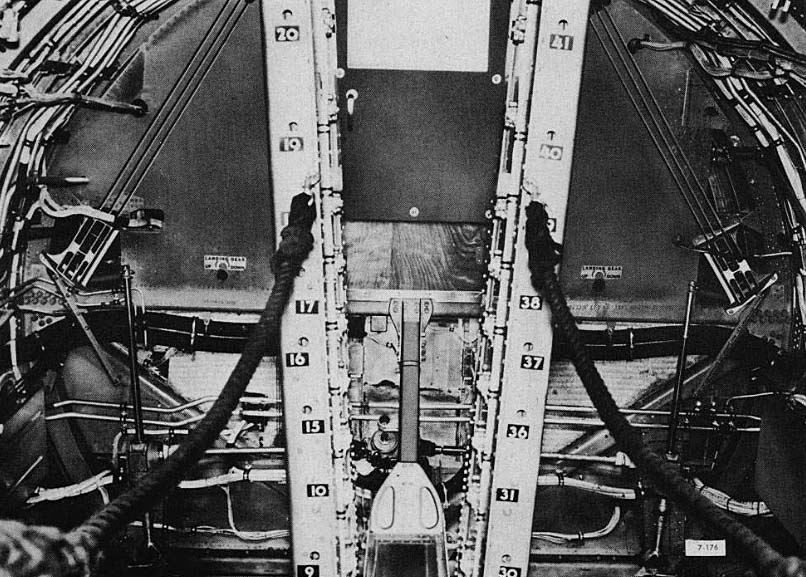
Again, this compartment should not be painted.
Note in the reference picture the large armor plates which mount on Station 4. The one on the right was typically not installed, so you can ignore it. Also note how the plate on the door does not reach all the way down. The white area on the door is a chart which details loading procedures.
Speaking of loading, the wench is shown attached to the racks in your rendering. This wench assembly was usually stored on the wall, just left of the door into the radio compartment. The other side of the door held an oxygen station and the aircraft’s relief tube.
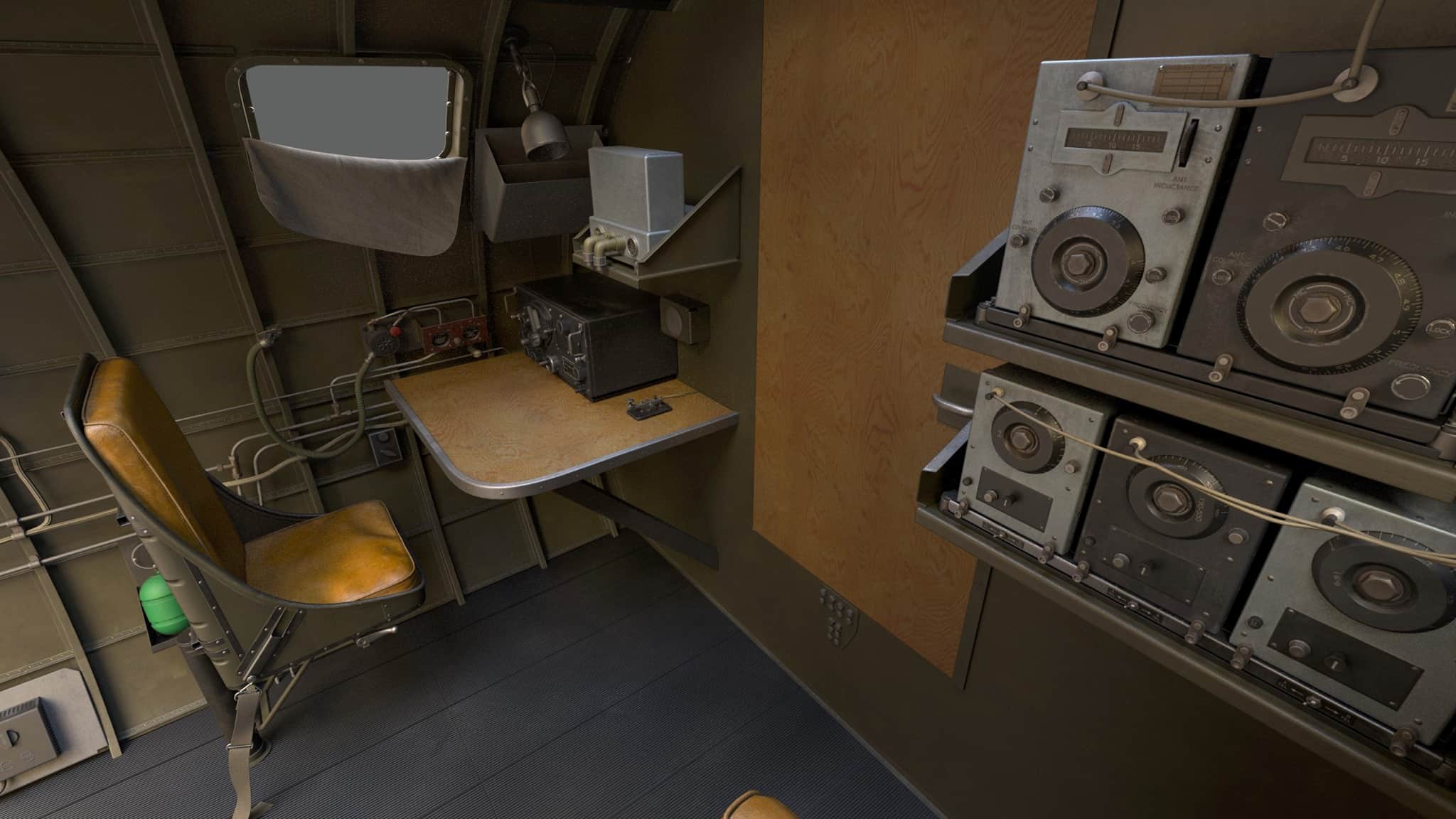
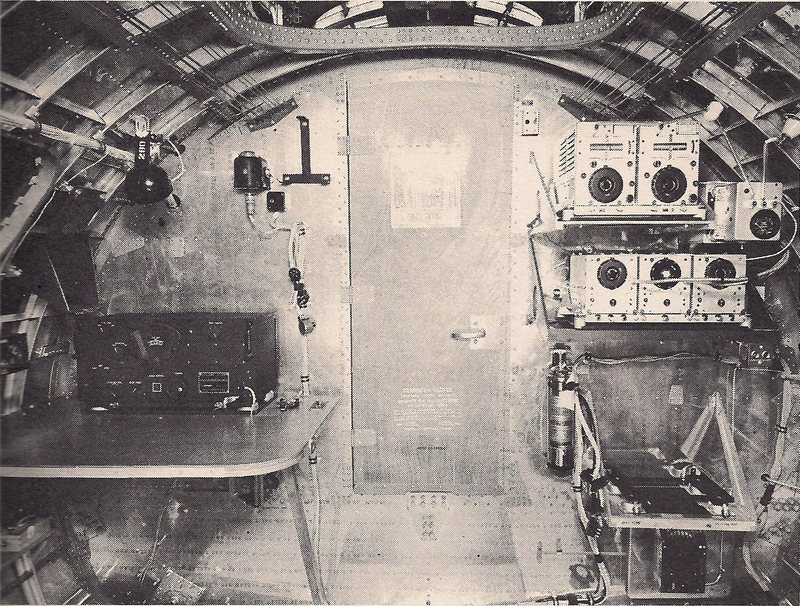
Again, the main issue is color as this compartment was never painted. Note the comparison photo above – you can even see the little red letters stamped on the bare aluminum.
Remove the metal band around the lip of the radio operator’s desk. This is something only found on inaccurate restorations. I built a pair of replicas using original blueprints back in 2018. You can check out an article I did on them here.
Note the SCR-274 Command Radio system on the right wall. You will notice that they are all silver. Early variants of this system were black, but they were phased out by mid-1943. Black and silver units could not be intermixed without changing the plugs on them.
The wires connecting the Command Radio transmitters and receivers to the relay box were hot, and as such, were covered in ceramic beads.
There are a good many missing cables and wires here. Each of the three Command Radio receivers had a splined tuning cable running from this compartment, through the bombbay, to the controller in the roof of the cockpit. Likewise, the two transmitters were powered by a dynamotor assembly located either on the floor or on the opposite wall. You have rendered the latter style, but you still need to connect the wires.
Note in the reference photo that there is an empty shelf and a T-bracket with nothing on it. The pieces that went here are not shown because they were classified. This was the SCR-595 IFF system. The controller for the IFF – the BC-958 and BC-965 – was located on the T-shaped bracket. The black piece beside it is the BC-706 inertia switch. This was an automatic self-destruct for the IFF should the aircraft violently jolt. The BC-966 transponder sat on the shelf. This shelf was sometimes mounted on Station 6, near the ball turret.
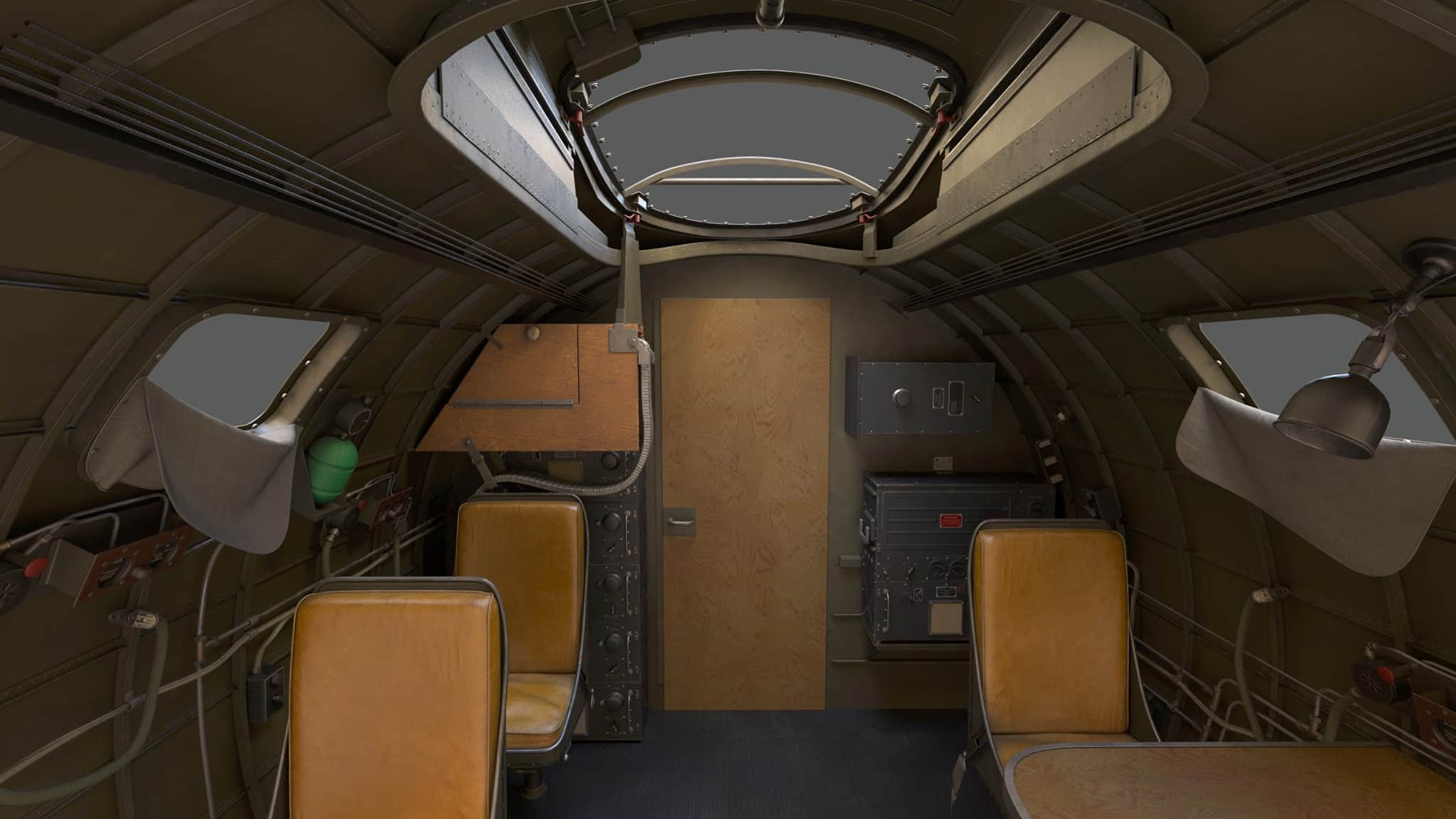
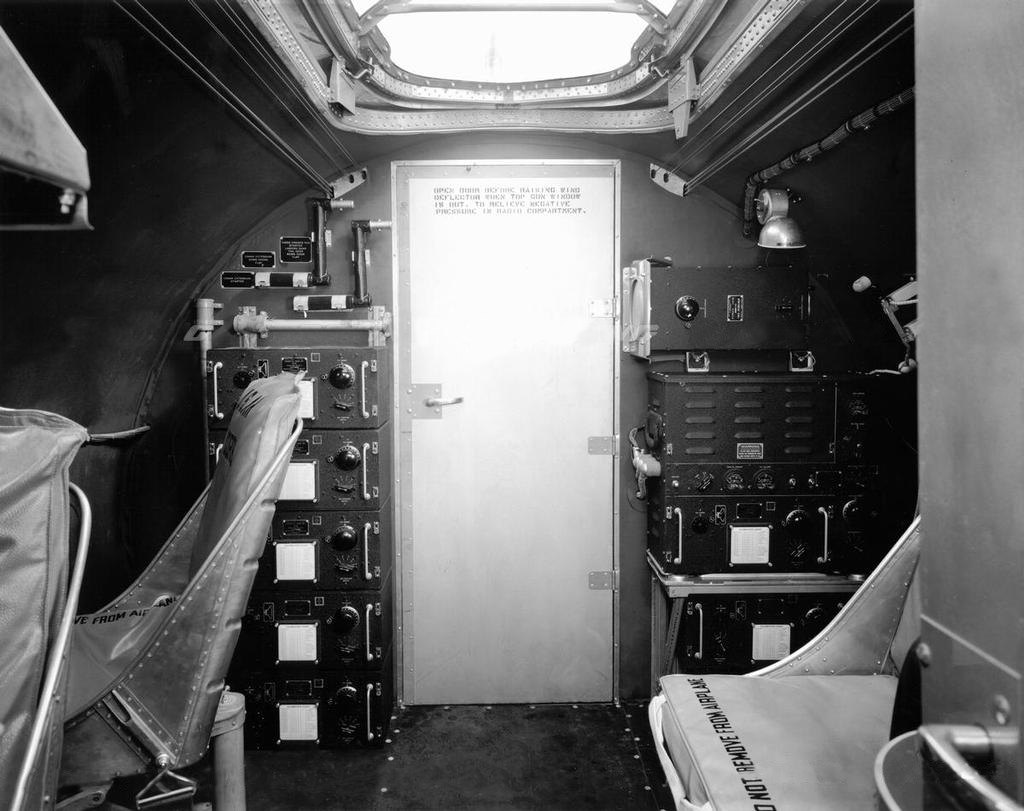
Please note that this reference photo is not from a G-model but from an E/F in the US. As such, the walls in this area have been upholstered, which is not correct for a G. However, it is a very good view of this area.
Again, the compartment should not be painted.
Remove the extra seating in this compartment. The extra seats were only found on the earliest B-17s and were never used overseas.
Speaking off seats, do not forget to put the same stenciling on the cushions as found in the cockpit.
A tuning unit is missing underneath the SCR-287 Liaison Radio system. The Liaison Radio used a series of large tuning units, which could be changed out of the BC-374 Transmitter. Each tuning unit covered a different frequency range. The units are stacked behind the ammo box, but there should be one more stored underneath the transmitter. There were seven in total: five stacked on the left wall, one kept under the transmitter, and one kept plugged inside the transmitter.
The ammo box is wrong. The door on this box did not have a handle. It was opened by lifting a pair of tension bands on top. You can see renderings I did of the ammo boxes here. While my renderings are for an F-model, all except the waist gun boxes are also applicable to your G.
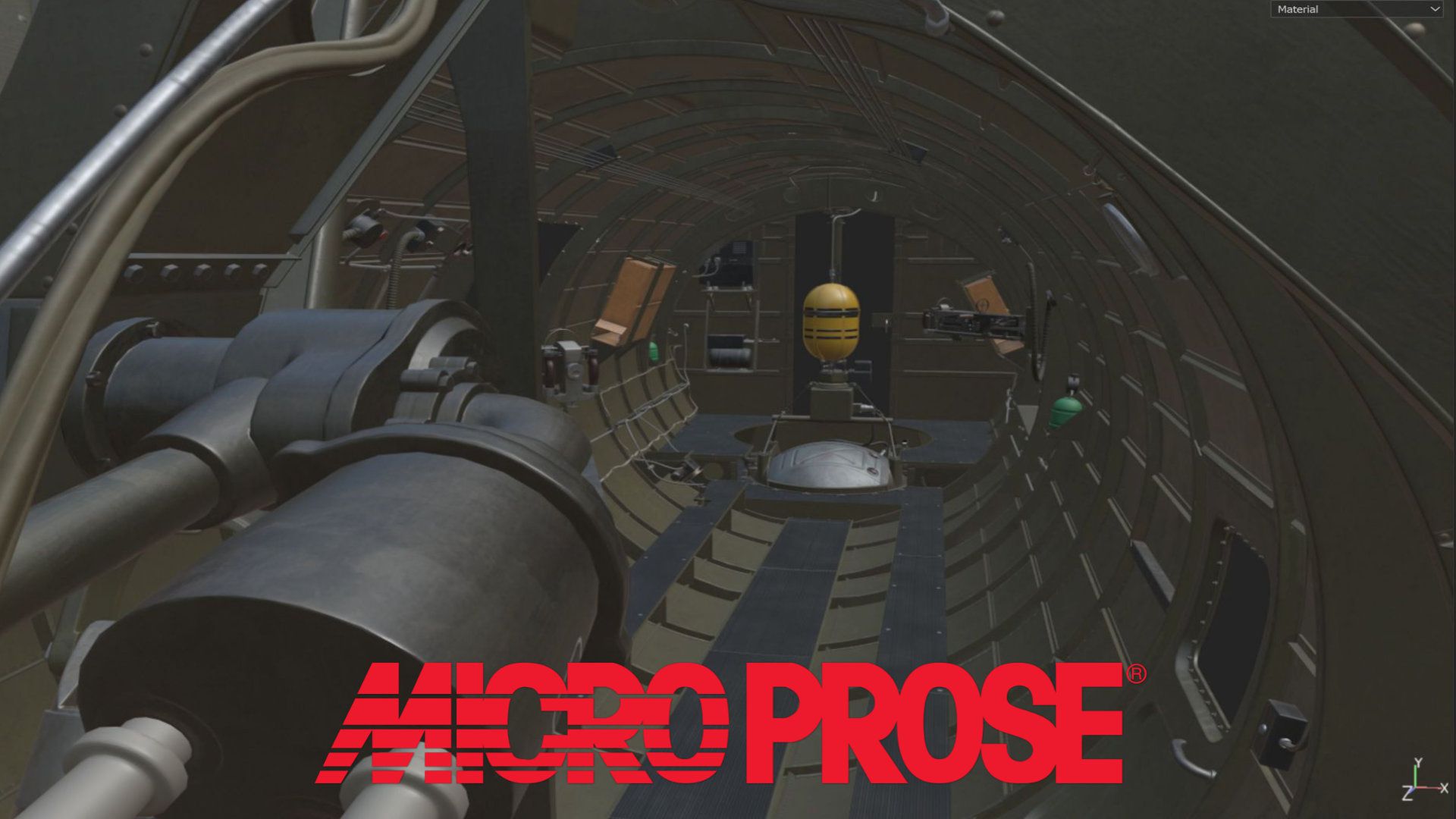
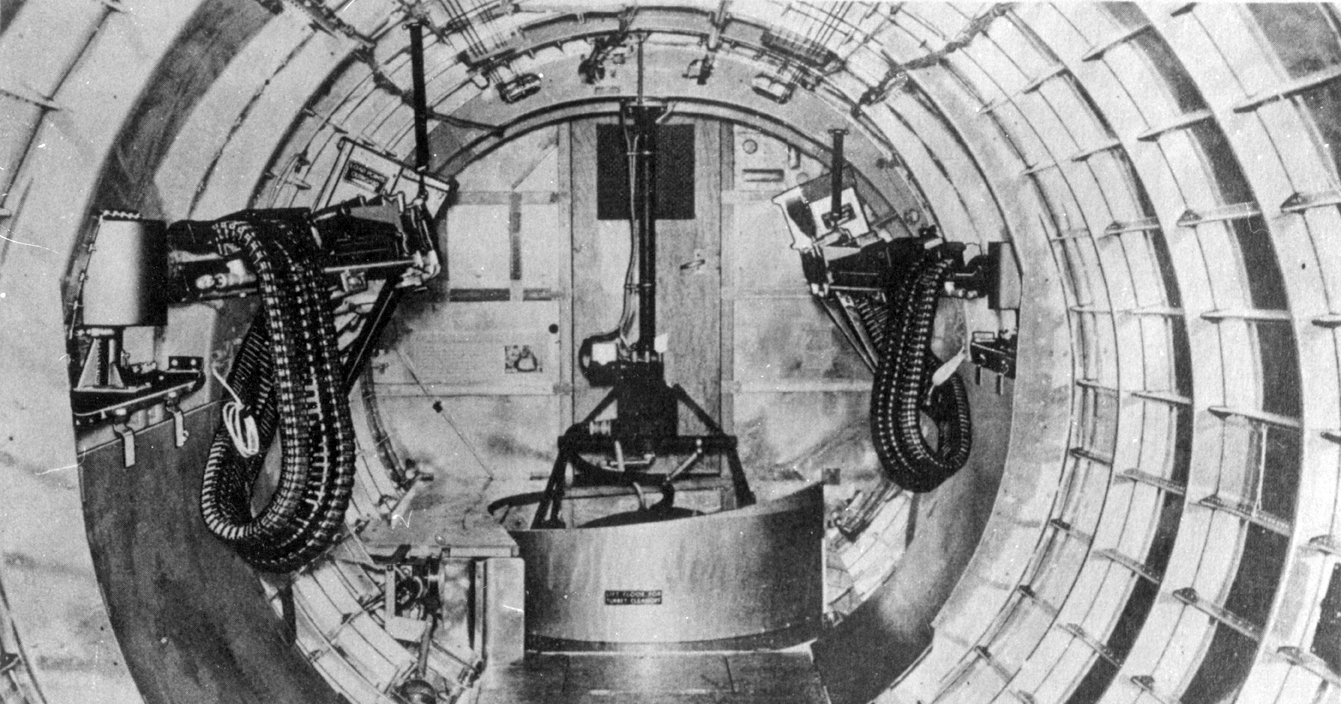
The waist section is definitely where the variant problem is most glaring. Your rendering is a mismatch to the extent that it is not representative of any B-17G. The giveaway is the flooring. True, the floor in your rendering would have been correct for the vast majority of wartime B-17s. However, this floor was not used on B-17s with staggered waist guns. Staggered waists were introduced very late in the G-series (which would go with your Cheyenne tail and late top-turret, but not the OD paint scheme). You will need to either replace the three-part floor with the large, single floor, or move the waist guns directly opposite one another.
And, once again there is the issue of the paint – the interior was not painted in the waist. Remember, the cockpit was the only compartment to be fully painted, and even then, it was Bronze Green.
Do not forget the ammo chutes for the waist guns or the armor plating above and below each gun position. Also note the armor plate behind the ball turret.
One thing that was common to all Allied aircraft in the European theater was VHF radio systems. This is not visible in the illustration above. Here is an example of one being installed at the Cheyenne Modification Center. These were usually mounted on make-shift wooden shelves in the waist compartment, usually beside the ball turret opposite where the floor wraps around.
The sizing of the ball turret hangar assembly is off. I have scanned a ball turret manual for use by our volunteers at Hangar Thirteen that you can reference. You will need to refer to the Type A-2A variant.
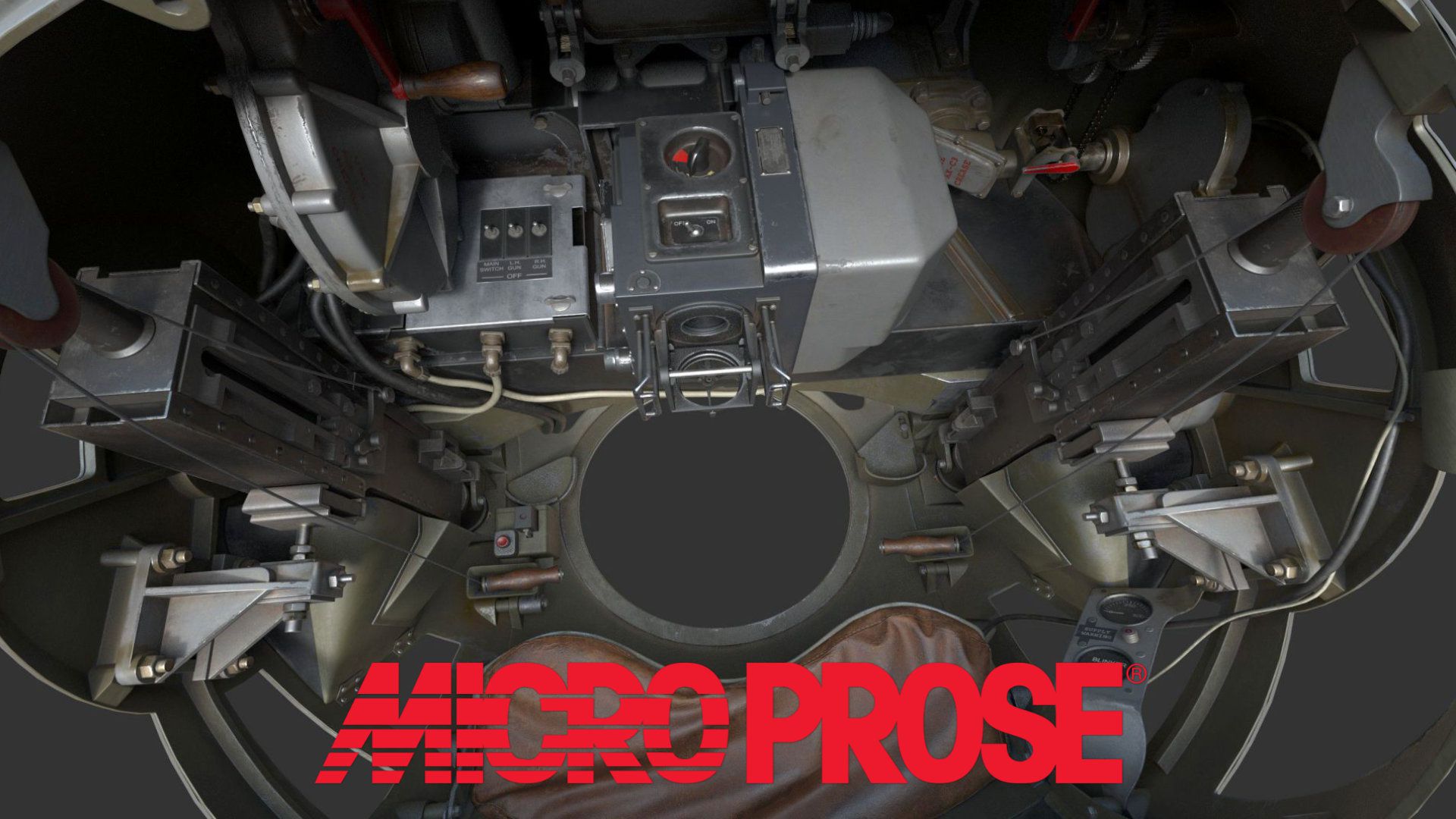
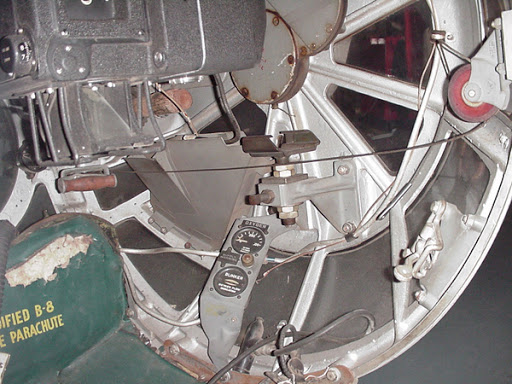
Your ball turret is nicely detailed. Once again, the primary issue is paint color. Ball turrets were manufactured by either Briggs Manufacturing or Emerson Electric – Emerson turrets had Dark Dull Green interiors while Briggs turrets had gray interiors. The reference photo shown above is of a Briggs A-2A on display in Stockton, California. This turret has never been altered, though the guns have been removed in the photo.
The seat is not brown leather but green vinyl, the writing on which reads “Use Modified B-8 Type Parachute”
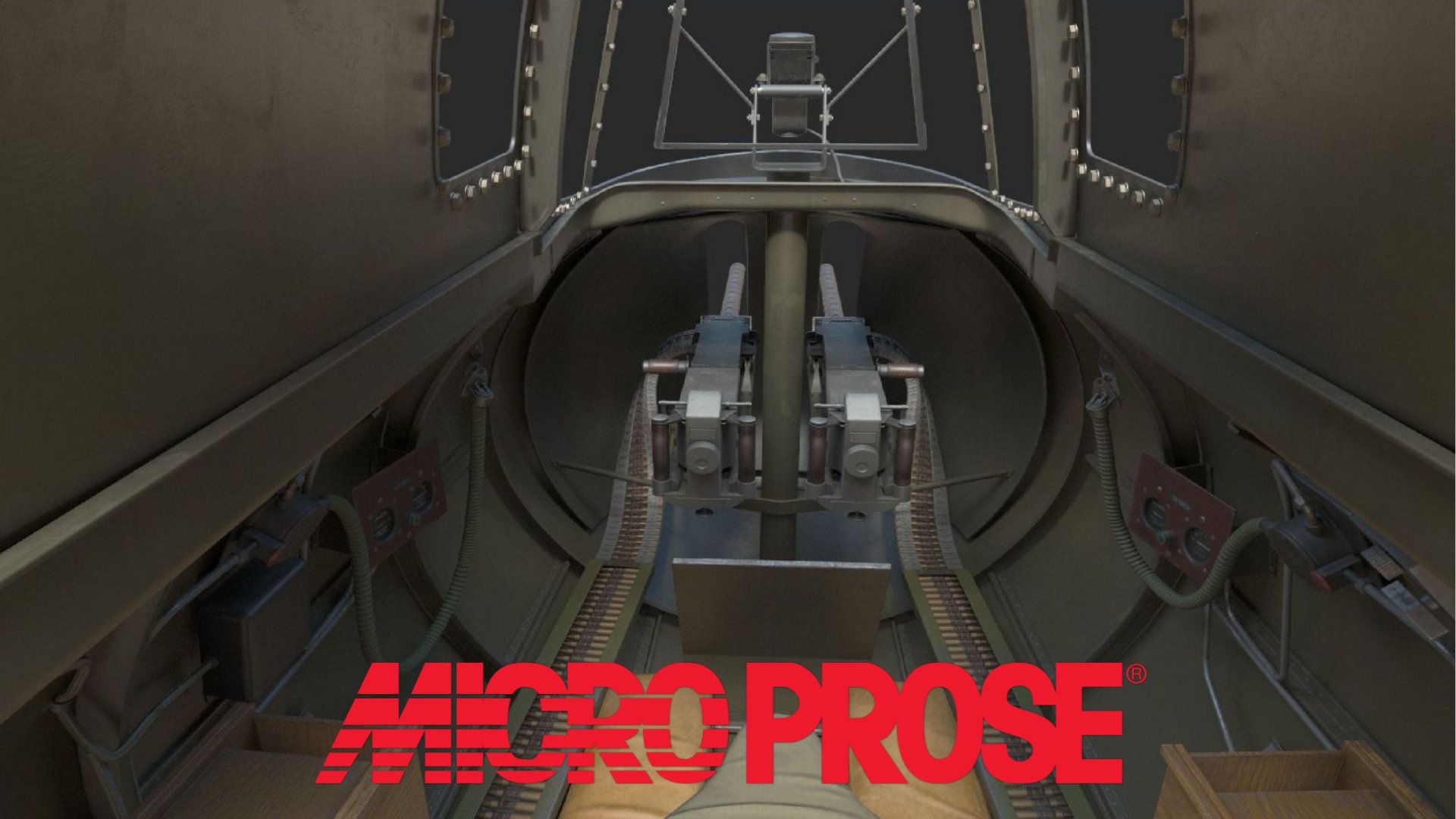
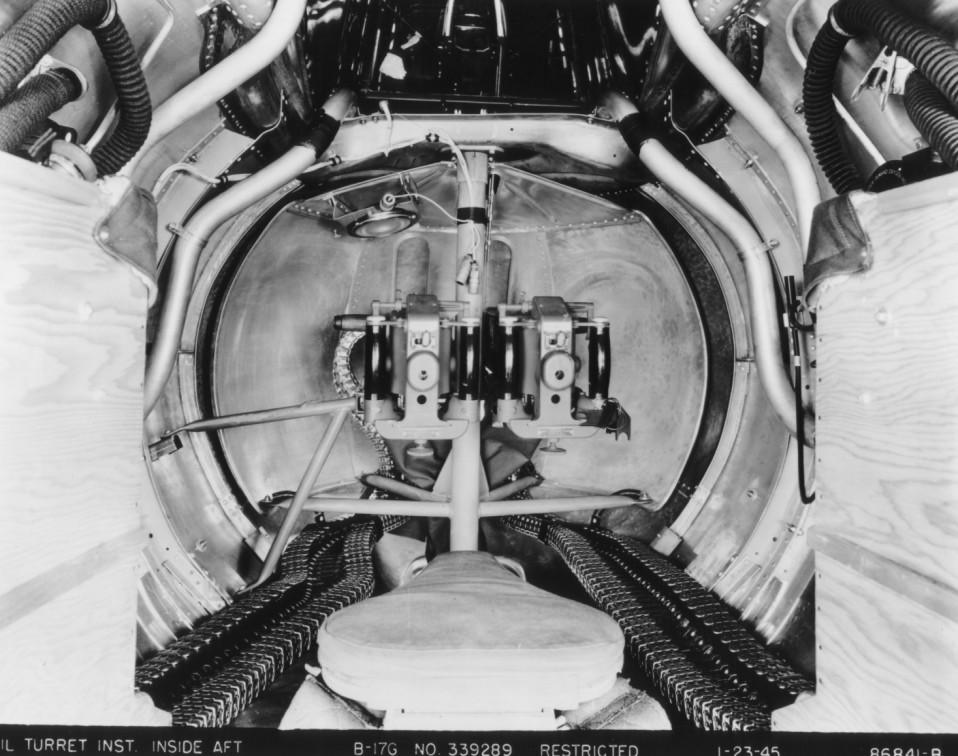
Yet again, the primary issue with the tail is color – the interiors were not painted.
The feed system you modeled was typical of older B-17s and would not have been seen on a late G-model. Instead, flexible chutes would have ran the whole way from the boxes to the guns.
The same goes for the armor plate you modeled. The older, stinger-type tail had a large amount of armor in this position, but the Cheyenne tail of late G-models dispensed with it to make for a greater degree of movement. You seem to have tried a mix of both.
The ammo boxes in the tail did not have lids.
Note the pipes in the reference picture, these are part of a heating duct which runs the length of the waist and tail section on late G-models. In the tail gunner’s position, the piping curls upwards into the window where it acts as a defroster.
Also note the little canvas pads on the corners of the ammo boxes. These were to keep the gunner from getting his jacket caught on the sharp corners.